Taj Mahal, Agra
The Taj Mahal is a breathtaking ivory-white marble monument located on the serene banks of the Yamuna River in Agra.

Located on the southern bank of the Yamuna River, the Taj Mahal is a breathtaking 17th-century mausoleum. It was commissioned in 1632 by the Mughal Emperor Shah Jahan to house the tomb of his favorite wife, Mumtaz Mahal. It stands today as the most iconic symbol of India and a testament to the heights of Mughal excellence.
Constructed entirely of translucent white marble brought from Makrana, the Taj Mahal is a marvel of engineering and art. It features a perfect fusion of Persian, Islamic, and Indian architectural styles. The exterior is decorated with intricate Pietra Dura (inlay work using semi-precious stones) and delicate carvings of floral motifs and calligraphy from the Quran.
The Taj Mahal is globally recognized as the ultimate symbol of love. It was built out of deep devotion, taking over 20 years and roughly 20,000 artisans to complete. The central focus is the cenotaph of Mumtaz Mahal, placed in perfect symmetry, with Shah Jahan’s own tomb added later beside hers—the only break in the structure's otherwise flawless balance.
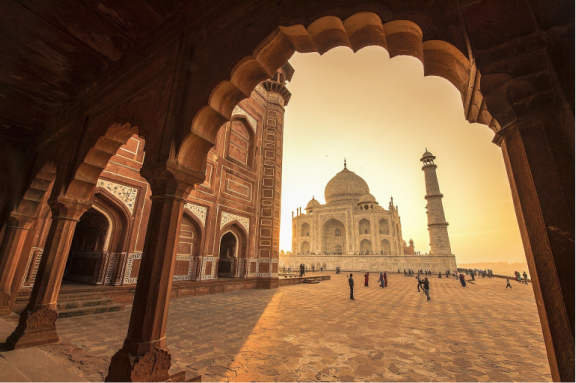 The Taj Mahal is globally recognized as the ultimate symbol of love.
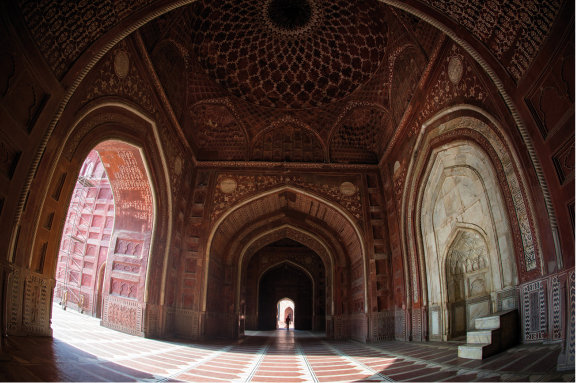 The Taj Mahal is globally recognized as the ultimate symbol of love.
The mausoleum is set within a vast, 300-meter square Mughal garden known as the Charbagh. The garden is divided by four raised pathways and features a central reflecting pool that creates a stunning mirror image of the Taj. These gardens represent the concept of "Paradise" as described in spiritual texts.
One of the most magical aspects of the Taj Mahal is how it changes color depending on the time of day. It appears soft pink in the early morning, dazzling white under the midday sun, and golden under the moonlight. On full moon nights, the monument glows with an ethereal silver radiance, offering a surreal experience for visitors.
As a UNESCO World Heritage Site and one of the New Seven Wonders of the World, the Taj Mahal attracts millions of visitors annually. It remains a bucket-list destination for travelers, historians, and photographers alike, offering a profound sense of peace and a glimpse into the grandeur of India’s royal past.